Evan Semón Photography

Audio By Carbonatix
Keep Westword Free
We’re $1,500 away from our spring campaign goal!
We’re aiming to raise $20,000. Your support ensures Westword can continue watching out for you and our community. No paywall. Always accessible. Daily online and weekly in print.
Not even a month after Gov. Jared Polis signed House Bill 26-1325 into law, some Colorado psychedelics advocates are trying to send a piece of the legislation back to voters.
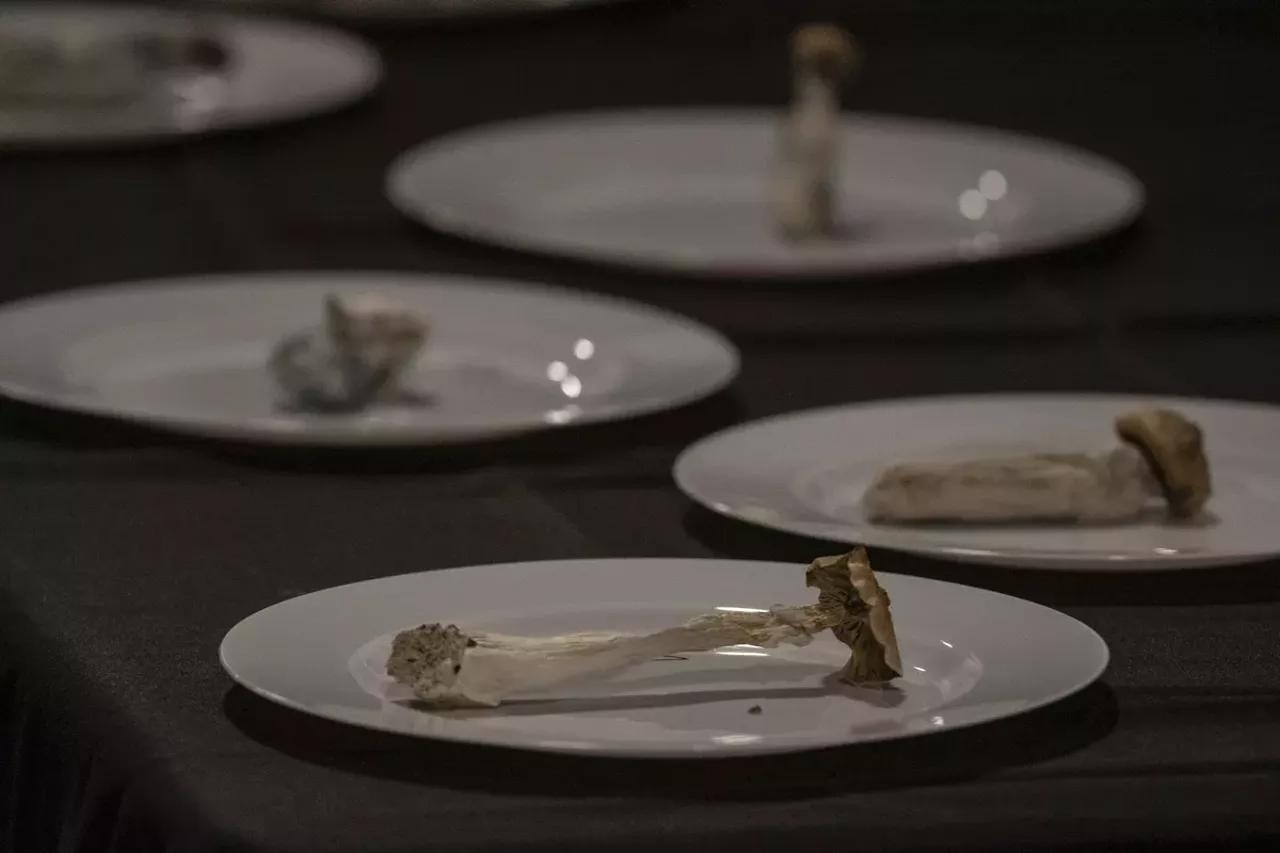
The bill was hailed by lawmakers as a way to create a state-backed research program for ibogaine, a natural psychedelic that has shown therapeutic potential for veterans and others struggling with addiction, PTSD, and other mental health conditions. But late amendments to the measure also targeted unlicensed mushroom businesses and gray-market operators, with new restrictions on how natural medicine can be shared outside Colorado’s regulated healing center system.
Organizers behind a newly launched campaign, Voted to Share, filed a referendum petition targeting Section 8 of HB 1325’s amended language, the controversial portion of the bill that rewrote Colorado’s definition of “personal use” of natural medicine. If successful, the effort would place the issue on the November 2026 ballot and give voters the chance to reject or approve that section while leaving the rest of the law alone.
Under the referendum language filed by Voted to Share and approved by the Secretary of State’s office, the petition asserts that Colorado voters approved the right to possess, cultivate and share natural medicines through Proposition 122, and that lawmakers narrowed those rights without voter approval.
Approved in the 2022 November election, Prop 122 legalized licensed psilocybin therapy and decriminalized the possession, use and sharing of psilocybin, DMT, mescaline and ibogaine. State lawmakers have since tinkered and added on to the state’s psychedelic framework, including the banning of sharing ibogaine, which carries certain cardiac risks and isn’t considered a recreational substance. According to Jacob Marlega, one of the referendum organizers and proprietor of a gourmet mushroom farm, HB 1325 goes too far.
“We believe it’s our right to use natural medicines responsibly, freely in our own safe spaces, and that voters approved the right to share,” Marlega says. “The legislature changed what that means, and we think voters should decide.”
The section in question says decriminalized natural medicines can only be shared in limited circumstances and requires consumption to occur concurrently with the sharing. It also creates new distinctions between personal use activity and commercial conduct, and new restrictions on the advertising of services related to natural medicine. The language was added right before the legislature adjourned, according to opponents.
Concerns over Section 8 of the law stem partly from Colorado’s gray market for psychedelic mushrooms. State regulators and some lawmakers are troubled by membership clubs, community organizations and other mushroom collectives that have used Prop 122’s personal use protections as cover for unlicensed sales.
Marlega says the referendum is not intended to undo the entire bill, just the provision addressing the definition of sharing.
“Everything else in the bill, including the ibogaine research program, should take effect as planned,” he tells Westword. “Our petition targets only that section that restricts personal use sharing rights.”
Backers of the repeal effort argue that HB 1325’s new definition could make it harder for people to legally obtain psychedelics from growers or community members if they are unable to cultivate mushrooms themselves or don’t know a friendly mycologist willing to share.
Regulated psilocybin healing center services in Colorado are still relatively new and aren’t covered by health insurance, leading to bills that can easily go north of $1,000 per visit. Colorado’s other decriminalized psychedelics, including ibogaine, aren’t yet approved for licensed healing centers.
“If you don’t have the connections or resources to acquire natural medicine on your own, it could be tough for some folks,” Marlega says. “Growing isn’t an option for every single person.”
The referendum campaign’s website, VotedToShare.com, is recruiting volunteers to collect signatures. To qualify for the ballot, organizers must gather 124,238 valid signatures from registered Colorado voters by August 11.
Marlega acknowledges that reaching that threshold will be difficult, but says the campaign plans to rely largely on grassroots volunteers.
“Colorado led the country on initial steps providing access to these natural medicines,” he says. “We can also lead on getting the rest of it right.”
Ibogaine research
If successful, the referendum wouldn’t affect the state’s ibogaine research initiative created by HB 1325.
Ibogaine is an extract of the iboga shrub, indigenous to Central Africa and a protected tradition for the Bwiti people. It interacts with opioid and serotonin receptors, which is often uncomfortable for users, but the effects has shown potential in helping treat addiction and other mental health illnesses. Last September, the state’s Natural Medicine Program Advisory Board voted to recommend therapeutic access to ibogaine, subject to compliance with the Nagoya Protocol, an international agreement.
Under the new law, Colorado’s Behavioral Health Administration can establish five pilot sites for clinical research into ibogaine’s potential for treating an array of mental health disorders, including PTSD and substance use disorders, with a particular focus on veterans. Certain financial conditions must be met, however, because the state isn’t funding the ibogaine research.
The pilot program depends on gifts, grants, donations or in-kind support, with key sections of the law taking effect only if BHA receives at least $150,000 in funding before January 1, 2028. More money would be needed to administer the program, as well.