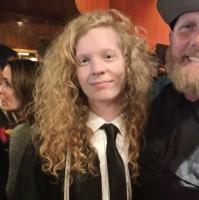
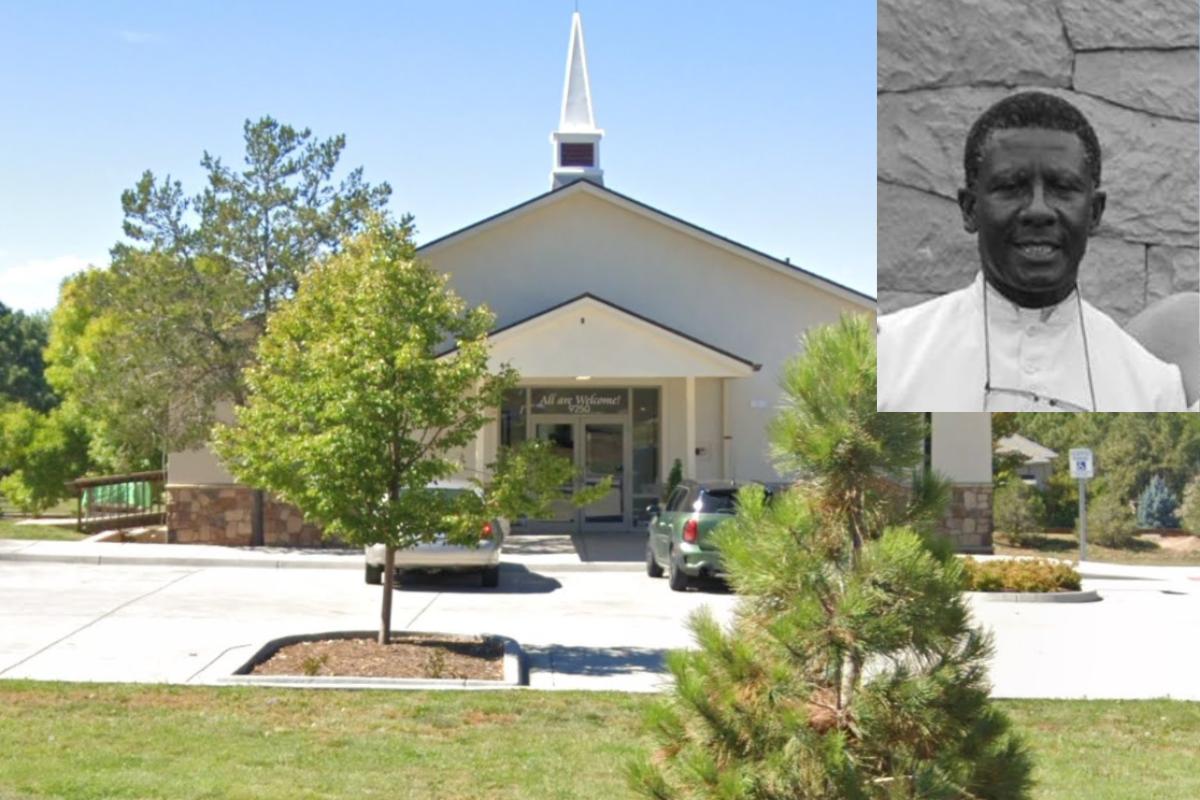
Provided by Philip Eberhart

Audio By Carbonatix
Keep Westword Free
We’re $1,500 away from our spring campaign goal!
We’re aiming to raise $20,000. Your support ensures Westword can continue watching out for you and our community. No paywall. Always accessible. Daily online and weekly in print.
A 78-year-old retired Greenwood Village pastor is fighting to stay in the U.S.
Edward Nalwamba, an immigrant from Uganda who has lived and preached in the U.S. since 2002, was detained by ICE last September. He has been in an Aurora detention center ever since, with his deportation set for Tuesday, June 30. Both his attorneys and his congregation are fighting the country and the clock, working to save him from persecution awaiting him back in his birth country — prosecution that is entirely based on his past fight for democracy under a ruthless regime, they say.
“I’m fearful for his life. I really am,” Reverend Philip Eberhart, a pastor at Resurrection Anglican Fellowship and Nalwamba’s close friend, tells Westword. “We’re hopeful that the date will move, that something will happen, that they’ll stay his removal. If they don’t, it’s still in God’s hands.”
Confusing Case
“Part of the problem with Edward was that he had lawyers who didn’t know what they were doing,” Eberhart says.
Denver-based immigration attorney Joy Athanasiou calls the case “convoluted.”
Nalwamba initially came to the U.S. for a religious conference in 2002. While here, he received messages from his colleagues back in Uganda telling him not to come home. They were concerned for his safety after years of fighting against the authoritarian regime under President Yoweri Museveni, who has been in power since 1986. Nalwamba had openly fought for democracy throughout his life, placing him and his friends on the bad side of the controversial leader, according to Athanasiou.
President Museveni actively fought against authoritative control in the early 1980s, even launching a guerrilla group, the National Resistance Movement (NRM), against then-president Idi Amin. During his uprising, he said Amin had rigged elections and promised term limits once he was in control. Museveni and the NRM officially gained control in 1986. He’s now in his seventh term.
During his reign, many outspoken citizens have gone missing, including some of Nalwamba’s colleagues, according to Athanasiou.
Nalwamba applied for asylum in 2002, but Athanasiou says his attorney at the time never filed the application and disappeared with the money. He applied on his own in 2003 and was denied, eventually appealing the decision to the 10th Circuit Court of Appeals in 2010. The immigration judge ultimately upheld the denial because Nalwamba had not been tortured, but was running from the fear of being tortured. Though his current attorney, Athanasiou, theorizes that his pro bono attorney at the time did not specialize in immigration law.
“The judge found that what they did to him wasn’t the severe beating, the severe torture necessary for asylum. He escaped the country before they could kill him, before they could torture him. So the law on asylum applies both when you’ve experienced past persecution and when you have a well-founded fear of future persecution,” Athanasiou explains.
After the appeal denial in 2010, Nalwamba was detained by ICE and placed in El Paso County Jail (where the department was holding detained immigrants). He was there for nearly nine months before being released with an “order of supervision,” meaning he had a deportation order but could not be immediately moved to Uganda.
He began working with quadriplegic men and remained a stalwart in the community, working as if he were 30 years younger, according to Eberhart.
Then, after nearly 15 years, ICE detained him in September “out of the blue,” Eberhart says. “He left two developmentally disabled men and a house full of goods. ICE just picked him up and left them there.”
Nalwamba’s new attorneys have since filed an emergency stay of removal to keep him in the country while they reopen his asylum case. They filed a motion to reopen his case, alleging that conditions in the country have worsened, putting him in greater danger.
Eberhart claims that Nalwamba’s daughter was approached by strange men while she was at university in Uganda, asking where her father was. Athanasiou believes that he would likely be arrested as soon as he got off the plane in Uganda.
“They’re either disappearing, or they’re exiled, or they leave,” Eberhart says of those who have spoken against Uganda’s long-standing regime.
Not only that, Uganda is at the epicenter of an Ebola outbreak — the second largest on record — according to the US Centers for Disease Control (CDC). The CDC even issued a travel health notice for those going there earlier in June.
Declining health
“Asylum is extraordinarily complex and very difficult to win,” even before the US Department of Homeland Security drastically increased activity and malpractice under the second Trump administration in 2025, Athanasiou says.
The Board of Immigration Appeals denied appeals at a rate between 97% and 98% since 2025, something Athanasiou calls “blanket denials.”
Nalwamba’s attorneys have also filed a habeas corpus to petition against his detention altogether, which they say has rapidly reduced his health. During Nalwamba’s nine months at the Aurora facility, they say he has lost over 30 pounds, has been reduced to needing a wheelchair and currently has an upper respiratory virus, and they fear he could have pneumonia. According to his lawyers, he has made multiple requests to be seen in the facility’s clinic, but requests are processed slowly, if at all.
The ICE facility, overseen by the GEO Group, a private prison company, also lacks proper accommodations for wheelchair users, they allege.
“We’ve discovered that his blood work shows signs of malnutrition. He’s constantly sick,” Eberhart says. “He could work like a 50-year-old. He’s no longer able to do that. And that I lay right at the feet of this ICE facility.”
Eberhart says he agrees overall with the Trump administration’s increased immigration enforcement, but sees the system as broken, leaving men like Nalwamba in unjustified situations. “It doesn’t make sense at all. He’s not a criminal. He has no criminal record. He’s been here for 25 years.”
Westword reached out to both ICE and the GEO Group regarding these claims.
Athanasiou says Nalwamba’s fellow inmates have stepped up to help him because, despite his ailments, he works to be a positive light in everyone’s life. Both she and Eberhart speak of his positivity and faith.
“He has resolved in his mind that what’s going to happen is going to happen. Whatever that will be is in God’s hands,” Eberhart says. “And yet he’s also resolved that if he goes to Uganda, he’s going to be dead in about a week.”
Nalwamba is scheduled to be moved outside of the state on June 29 and deported on June 30. Athanasiou hopes and expects to have a decision on the stay order right before he’s set to leave Colorado.
If the stay is granted, the lawyers can then begin working on reopening his asylum case and granting him residency in the country. If not, he will be sent to Uganda by next week.
The local Anglican community and friends of Nalwamba will be holding a vigil and prayer service outside of the Aurora ICE processing center at 4 p.m. on June 27, 3130 Oakland St. Eberhart states that it is not a protest, so no one should bring picket signs; it is a time to pray for help to keep a community pillar back in the community, he says.
“The vigil is going to be a meeting of the Father Edward Fan Club,” Eberhart says with a laugh.