
Audio By Carbonatix
Keep Westword Free
We’re $1,500 away from our spring campaign goal!
We’re aiming to raise $20,000. Your support ensures Westword can continue watching out for you and our community. No paywall. Always accessible. Daily online and weekly in print.
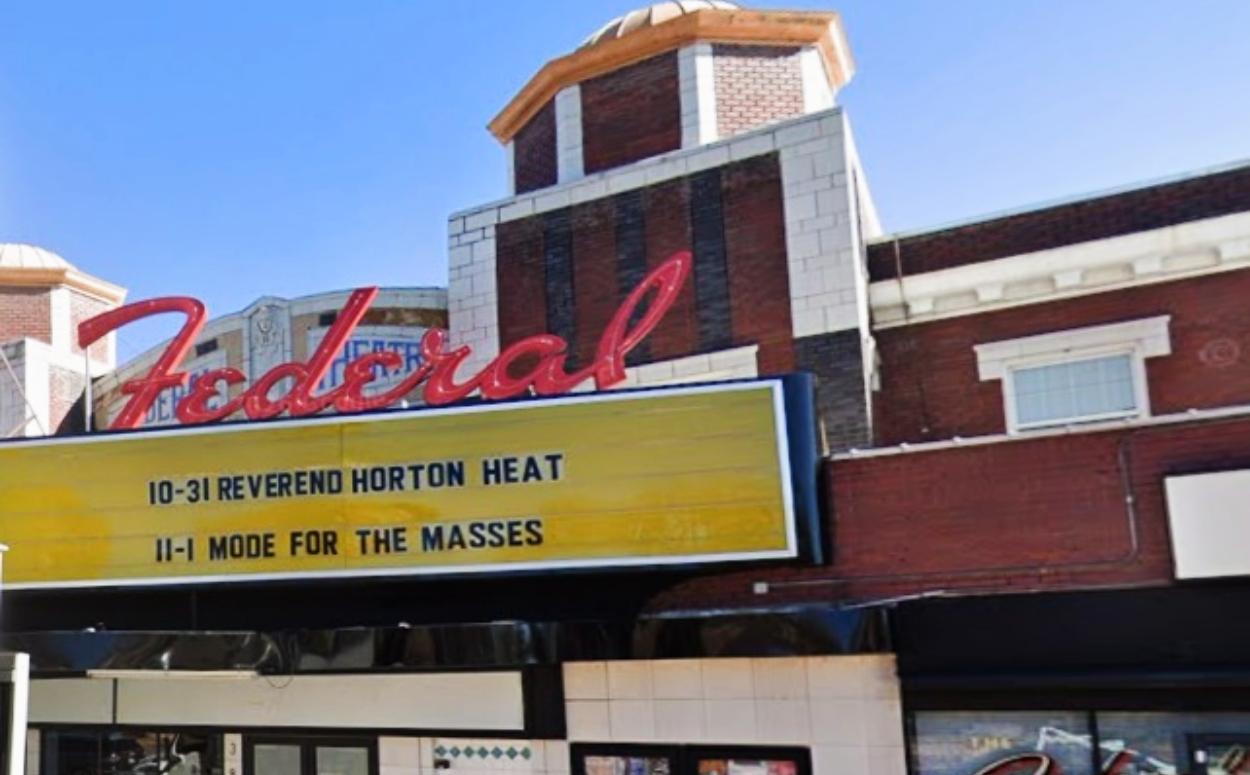
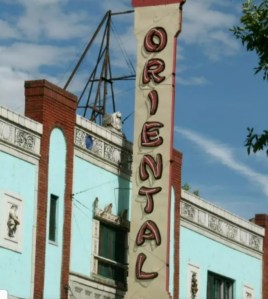
The most engrossing action at Denver venues typically takes place onstage. But right now, there are plenty of intriguing dynamics playing out behind the scenes at the Federal Theatre, the Oriental Theater and HQ Denver thanks to an effort by select workers to unionize, much to the chagrin of the nightspots’ owners.
The organizing attempt is focused on between 15 and 20 audio engineers who ply their trade at the Federal, 3830 Federal Blvd.; the Oriental, 4335 W. 44th Ave.; and/or HQ Denver, 60 S. Broadway, with advocates hoping to be represented by the International Alliance of Theatrical Stage Employees‘ area affiliate, IATSE Local 7. The group’s members are largely drawn from Denver-based stage, film and exhibition employees.
The unionization vote is slated for June 30. And while Scott Happel, co-owner and partner of the three enterprises along with Carnivale De Sensuale and Berkeley Bodega, declined to comment directly on the subject, he provided Westword with a letter directed at HQ staffers that marshals arguments against joining. One section reads:
“While we don’t know what would end up in a collective bargaining agreement between the Company and the Union, collective bargaining agreements often include provisions such as the following:
- Zero tolerance for drug and alcohol use, including prohibitions on the use of marijuana and alcohol;
- Scheduling that requires pre-set start and end times, including mandates for employees to work the shifts they are scheduled;
- Management rights to schedule based on the venue’s needs;
- Preapproval for shift changes / swaps;
- Set break and meal periods; and
- Formalized disciplinary processes, including holding all individuals equally accountable.”
The letter encourages the engineers to “please get informed. Once informed, we think you will agree that this is not in your best interest or the best interest of HQ. VOTE NO.”
Hill Probasco, the IATSE Local 7 organizing coordinator working with the folks at the Federal, Oriental and HQ, frames the situation very differently.
The campaign “originated the way that a lot of ours do,” he says, “which is that one or more workers reached out to us wanting to discuss how collective bargaining and the process of forming a union could help to solve problems over the long term.”
Probasco doesn’t go into detail about the employees’ chief concerns, but stresses that “broadly speaking, people don’t usually come to us to organize about issues that are strictly economic. In this industry in particular, the work can be pretty informal and unreliable, unstable. I think people who do this kind of work in these markets are looking for a little bit more say in how their careers are being run. They want to be able to have more consistency and more balance in their careers in general.”
He adds, “Fundamentally, what organizing does is [it] creates an equal bargaining table between the workers and management. That’s why they came to us in the first place. They felt decisions that were being made were affecting them negatively and they felt they needed more say in the workplace.”
Shortly thereafter, Probasco continues, “We collected authorization cards, which trigger the NLRB [National Labor Relations Board] process. We collected a very strong majority of union authorization cards that basically said, ‘I want to have a union in my workplace.’ IATSE then sent an email to the venues and asked them to honor the majority of their employees who wanted to unionize and voluntarily recognize the union, which they have the option to do. When they neglected to respond, an election was scheduled for the 30th” between 10 a.m. and noon at the Federal’s Green Room.
By Probasco’s estimate, the percentage of union venues in Denver “is about 50-50. We have the larger ones, like [Red Rocks Amphitheatre], the DCPA and the Convention Center, as well as Live Nation venues like the Fillmore Auditorium, Summit Music Hall and the Marquis Theater. But the ones owned by AEG,” such as the Ogden Theatre, the Gothic Theatre, the Bluebird Theater and the Mission Ballroom, “are not organized.”
Despite what he sees as an enthusiasm for unionization among engineers at the Federal, Oriental and HQ Denver, Probasco shies away from predicting victory. In his words: “A lot can happen in a week.”