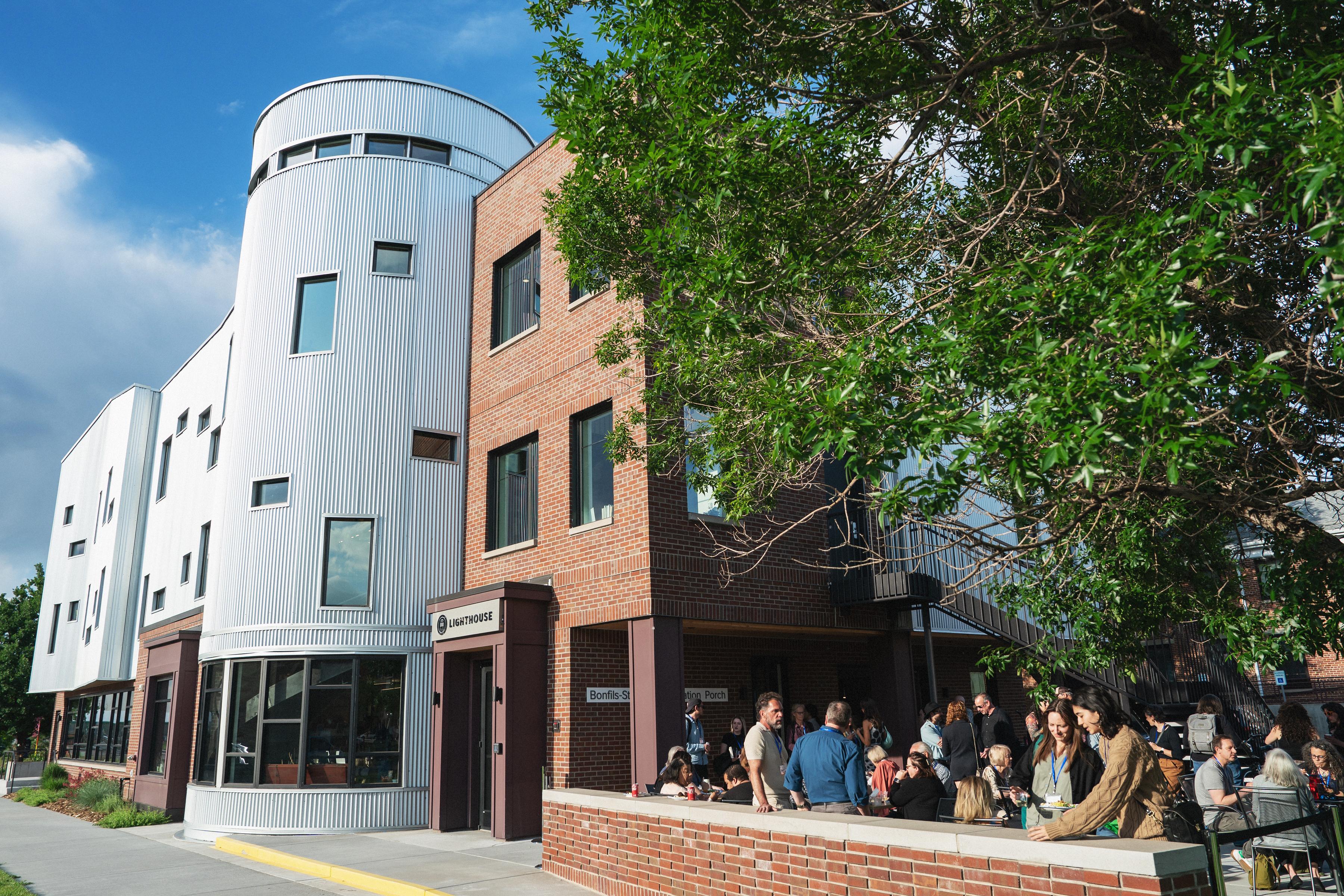
Amanda Tipton Photography

Audio By Carbonatix
Keep Westword Free
We’re $1,500 away from our spring campaign goal!
We’re aiming to raise $20,000. Your support ensures Westword can continue watching out for you and our community. No paywall. Always accessible. Daily online and weekly in print.
In this day and age of UFC bouts on the White House lawn, media being taken over by the likes of bought-and-sold propagandists like Bari Weiss, and an anti-intellectual fervor still gripping too many American voters…it’s good to see literature still supported on both a local and national level.
Lighthouse Writers Workshop was one of 40 recipients — the only one from the Mountain West region — of the newly developed Literary Arts Fund, which launched in October 2025 by the Mellon Foundation as a collaborative effort with the Ford Foundation, John D. and Catherine T. MacArthur Foundation, the Poetry Foundation, and several others, in order to catalyze increased support for the nonprofit literary arts field.
According to research conducted by the LAF, just 1.9% of the $5 billion contributed by private foundations to arts and culture in 2023 went toward literature and writing, a fact that has held consistently true for the previous five years as well. In response, the LAF plans to provide more funding — at least $50 million over the next five years — to creative writers and the important organizations that support their work.
However, LAF doesn’t publicly share how much funding it awarded to Lighthouse or any of its recipients.
The inaugural recipients of the LAF were selected through a competitive open call process, with applications reviewed by panels of writers from across the country representing diverse genres and perspectives. The Literary Arts Fund will opened its next grant opportunity — which will support new, one-time innovative projects — on June 8; more information can be found on the Fund’s website.
“The literary field is getting smaller and smaller,” says Bridget Gwyn, Lighthouse’s Festival & Events Manager. “And access to community events is also shrinking. There’s been such a huge push for community. People want that, especially considering where we are right now in the world. It’s important that people are able to find like-minded others.”
“Thoughtful people,” adds Lighthouse co-founder Andrea Dupree. “Just thoughtful people.”
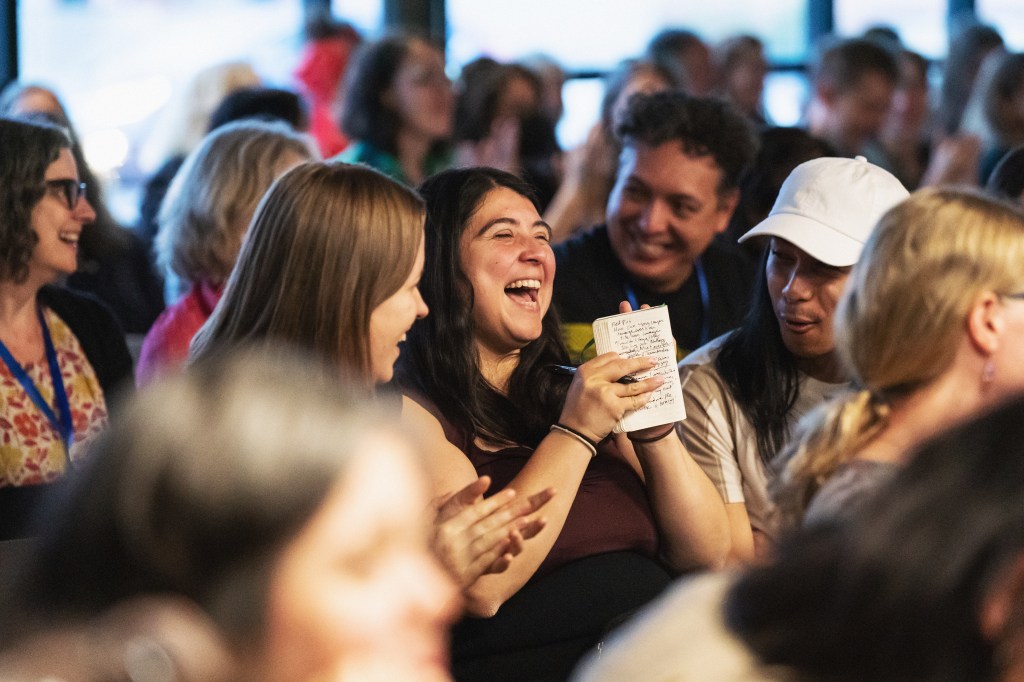
Amanda Tipton Photography
The staff at Lighthouse is honored to be among the LAF recipients, and the full list of awardees is made up of some impressive names and heavy-hitters.
Dupree adds that it’s even more important in our current age of burgeoning — some might say out of control — Artificial Intelligence. “People do better when they’re learning with other people,” says Dupree. “When they have to struggle through a learning process in a communal setting.” The struggle itself, she says, is important. “We need to get back to that good struggle, that shared struggle, with language and trying to get something right.”
It’s in that spirit that Lighthouse does its daily work, which is exemplified perhaps in no better way than with its annual LitFest, equal parts celebration, instruction and inspiration. This year, Lit Fest is a full eight-day event focused on writers and readers, an extravaganza of weeklong and weekend advanced workshops, craft seminars, readings, salons, business panels, agent meetings and parties. Lit Fest 2026 will take place June 12 through 19 at Lighthouse Writers Workshop; ticketing details, an event schedule, and more information can be found in the LitFest Guide.
“It’s important that people know that we work hard to make sure LitFest is accessible to everyone,” Gwyn says. “Faculty readings, visiting author readings, and our Turn the Page event — those are all very open and affordable and available for people who really want that community of writers, but don’t know how to find it, or how they might fit into it. I’m hopeful that we can appeal to everyone who’s interested. That’s the whole point.”
The desire for availability to all has made it necessary for some of the LitFest offerings to be made virtual as well as on-site, Dupree says it’s the in-person collaboration that remains the focus. “Despite the fact that we have the ability to reach outside of our communities now, with the online environment, it’s so much stronger if there’s that in-person component that can be sustained virtually versus doing all virtual all the time, and you never have to leave your couch or kitchen table. We’re seeing a lot more people coming back out into the world. People love working from home, but that only means we have an even greater need for those third spaces to actually be around people.”
“It’s very easy to isolate yourself,” agrees Gwyn. “You can be talking to a bunch of people at the same time, but it’s not the same as having that in-person connection.” Gwyn, who’s Gen Z herself, says “the youth” are calling that phenomenon “friction maxxing,” which she says refers to something being done in such a way that it’s purposefully more difficult than it could be. But that’s a good thing, in this sense. It brings up Dupree’s earlier idea of the “good struggle” of communal learning.
“It’s something that I think the Literary Arts Fund recognizes,” adds Dupree. “The importance of moments that can only happen face-to-face in the real world. I’ve heard so many people say that their favorite thing about coming to an event is getting to hang out with people before and after, when you can share the excitement about what’s about to happen, or afterwards, talk about the most affecting moments that you’ve all shared.
“That’s what LitFest is really all about,” says Dupree. “Making room for those moments.”
Fortunately, the new Literary Arts Fund agrees.
Lit Fest 2026 will take place June 12–19 at Lighthouse Writers Workshop, 3844 York St.; ticketing details, an event schedule, and more information can be found in the LitFest Guide.