Brian Degenfelder

Audio By Carbonatix
For drag queen Coco Bardot, this year’s Black History Month started early. “My first event was on the 29th, because we were like, ‘Let’s just go ahead and start it early!’ We’re gonna co-opt January,” she says of her extended celebration. “Literally every Thursday through Sunday is filled up.”
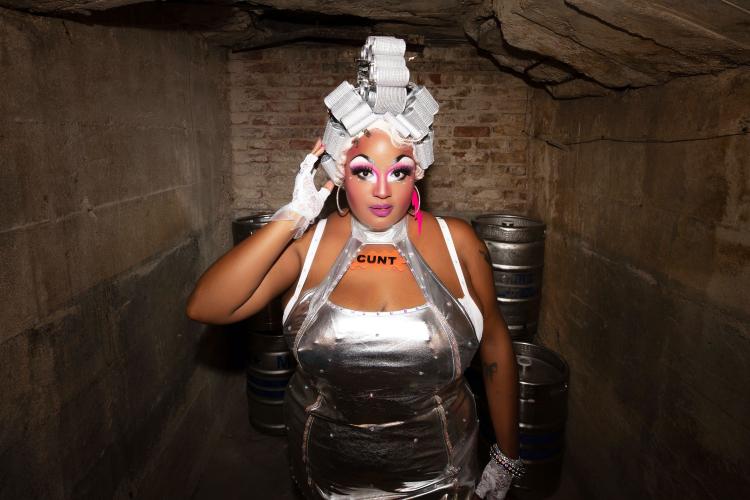
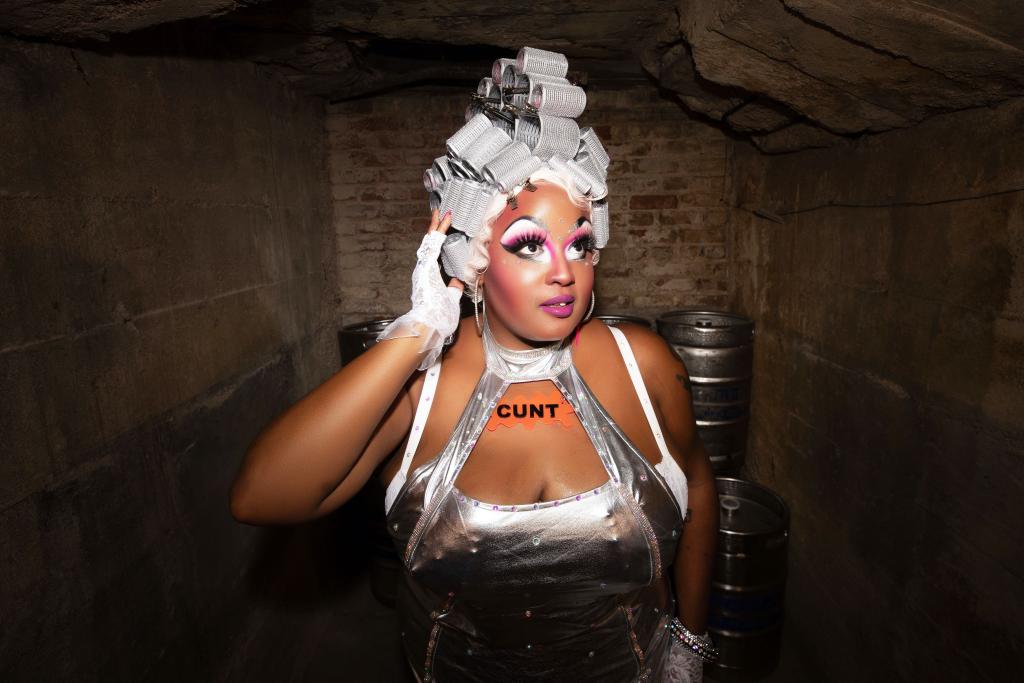
Bardot has been a drag entertainer for the past thirteen years, and has made a name for herself with her unique brand of Black Girl Magic: theater geek meets video vixen, with an extra helping of attitude and a dazzling (if often mischievous) smile. Originally from Ohio, she’s lived all over Colorado and currently resides in Denver. “I visited here a bunch as a kid, and I moved here like, a month after high school, because Ohio was just not the tea,” says Bardot. “I lived in Canon City for about two years. My aunt and her wife live in Canon City, so I was getting, I guess I’d call it my ‘gay training’ from my aunts, without knowing I was getting it.”
She was drawn to the performing arts because of her musical theater background, and that eventually led her to drag. “I’ve always kind of gravitated towards theater, and I happened to find Club Q when I moved to the Springs,” she says of the Colorado Springs LGBTQIA+ bar that closed following the tragic mass shooting that took place there in 2022.
That bar is where Coco Bardot came to life. But she didn’t start out as Coco Bardot; she started as Janet Weiss, the wide-eyed protagonist of cult classic The Rocky Horror Picture Show.
“I started doing Rocky Horror shadow cast, actually,” she recalls. “Honestly, the first time I saw [Rocky Horror], I was like, ‘I don’t get the hype.’ Then I went to a shadow cast, and it was life-changing for me. I was like, ‘I want to do that.’ So my shy little self auditioned for Janet and got Janet. I did that for two or three years before I started doing drag.”
During her shadow cast shows, often hosted by Club Q, other performers in the audience took notice of Bardot’s natural talent for the stage. “People were like, ‘Hey, you’re pretty good, you should try drag.’ I put the wig on, and here I am,” Bardot says.
Veteran drag queen Porsha Demarco Douglas, who has raised numerous Colorado drag performers, was like a drag mother to Bardot; she also got support from burlesque dancer and producer Mr. Valdez. “[Porsha] was like the resident house drag mom at Club Q, and we were roommates for a little bit,” Bardot recalls. “I was lip syncing to a song, and she was like, ‘You should put a wig on and do this!’ So she was part of it, and Mr. Valdez, who is a producer down in the Springs.”
Bardot’s stage name came from the sex symbol who helped her realize her own queerness: the legendary Pam Grier. “My queer awakening was watching Coffy with Pam Grier, and then Foxy Brown and Jackie Brown. Pam Grier has been my heart and my gayness since I can remember. So I loved the movie Coffy, but I thought ‘Coco’ was a little bit sweeter,” she says.
“Bardot” comes from legendary French starlet Brigitte Bardot. “I’m Haitian on my dad’s side, so I liked the French thing, and I thought ‘Bardot’ sounded really fancy.”
Unfortunately, the recently departed original Bardot turned out to be racist, misogynistic, homophobic, xenophobic and generally problematic, so now the surname is more of a reclamation than a tribute. “Someone brought up, ‘Hey, are you going to change your name?’ No. I found out years ago, maybe a year or two after I started drag, and I was like, ‘Oh well.’ She has no correlation to me,” this Bardot declares. “Brigette Bardot is a piece of shit, and Coco Bardot is better, so it’s like a reclamation for all my queer people and brown people that she hated. I’m taking it and making a profit off of it!”
Jay Cupcake Photography
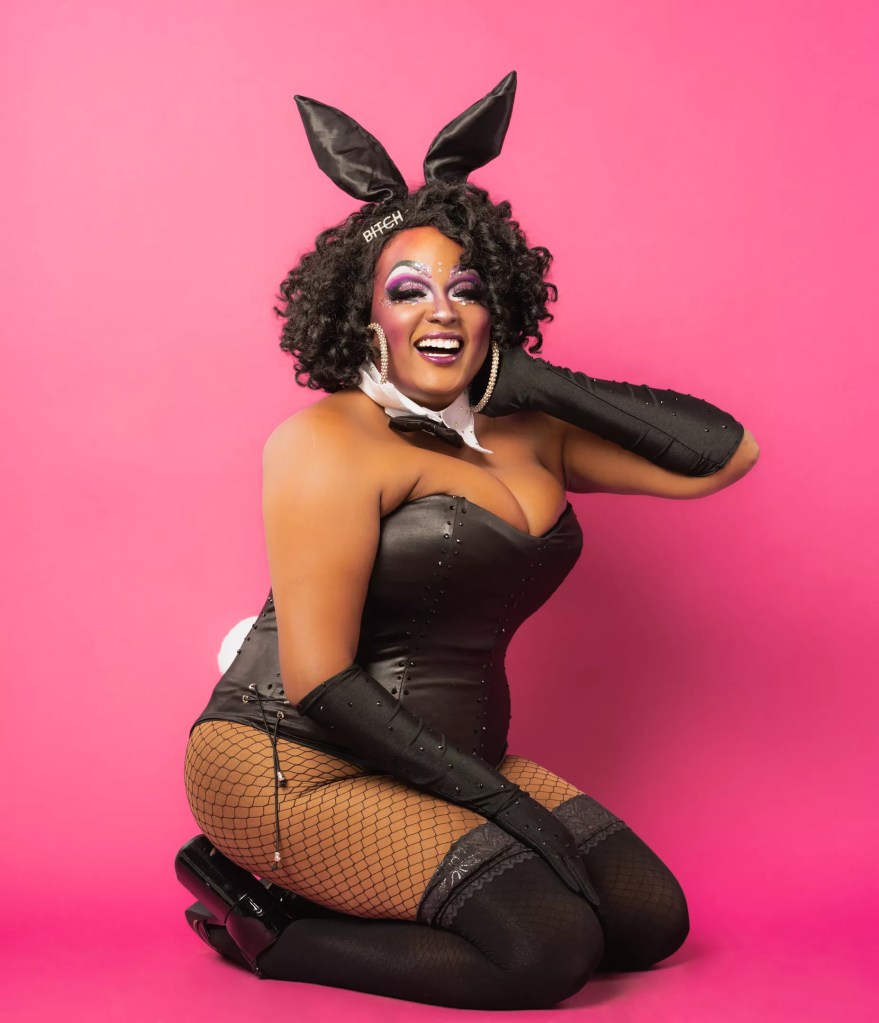
Equally inspired by old Hollywood leading ladies, clownish camp and contemporary recording artists, Bardot’s drag embodies everything she desired and desired to be when she was growing up. “I always think back to the bio that I use professionally, which is like, ‘Coco Bardot is a mixture of Baby Tate meets Mae West, with a little bit of clown girl mixed in,’” she says, referencing sex-positive queer singer and rapper Baby Tate. From Grier to cartoon characters (Bardot is also a cosplay queen and has recreated many iconic Black figures for her “Black Girl Magic” tribute series), Bardot’s biggest influences are other empowered Black women. “I just want Coco to be every vivacious, hip-swinging woman that I ever envied as a kid, every beautiful, busty soul singer. Jill Scott is a huge influence, too. Her sexuality and sensuality just do it for me. Coco is definitely an amalgamation of all that, on top of like, the emo art girl from 2009.”
When Bardot first started performing, many people she encountered were uncomfortable with the idea of a cisgender woman doing drag. Rather than recognizing that drag is more than just men wearing dresses, naysayers tried to push Bardot towards more traditional avenues for female entertainers, like burlesque. “Back in the olden days of 2012, when I started drag as a female entertainer, I got a lot of pushback,” reveals Bardot. “It was cute until they realized I wasn’t going to take my clothes off, I wasn’t a gogo [dancer], and I wasn’t performing for the male gaze.” Or, defaulting to the narrow idea of drag as gender-swapping, they encouraged her to perform as a drag king instead: “People tried to make me be a boy in drag, and I’ve done king drag, and it’s terrible. Don’t ever ask me about Coco’s twin brother, Cocaine. That little gay boy is out there ruining lives!”
Bardot never took to male drag, but she did dip her toe into burlesque. “I definitely embraced burlesque and started to learn from the art more so back in 2020 when the bars started to reopen,” she says. “I was invited to be a ‘variety performer’ in a burlesque show, and I took it as a mission to be like, ‘Let’s just try it.’”
She ultimately brought elements of drag into her burlesque, and elements of burlesque into her drag, and she’s won multiple awards for both art forms. “Usually when I’m booked in burlesque shows, I’m the ‘variety entertainer.’ Somebody who’s not just going to do the strip tease, and bring a little something extra, like a lip sync or a live singer. So I’m usually considered more ‘variety’ when I do burlesque shows,” she explains. “When I’m booked for drag, I go into burlesque because I know it makes money. I know that despite what the crowd looks like, or who I interact with, they’re gonna live when I start taking my clothes off. It’s not just like a coat reveal; it’s a whole act with a story. Burlesque definitely makes me tell a story more with my drag.”
Even seasoned audiences may have never seen a drag performer quite like Bardot, but her presence signals a shift away from the male-centered attitude that has too often ruled over queer nightlife. “Now I can comfortably and confidently say I’m performing for the sapphic gaze, and the gay boys and everyone else are just there to give me money,” says Bardot with a laugh.
As a pansexual Black woman, Bardot is acutely aware that she represents more than just herself every time she sets foot on stage. “There are so many layers of it, really. I’m not only performing for myself when I perform in drag. I’m there to be part of the show, and kiki with my castmates, and make money to pay bills, and get that little itch of serotonin and bring my art out there, but I’m also well aware that as a female Black drag queen – a queer female Black drag queen, because if we’re women, they always think we’re straight – I am a representative of what that looks like,” she confirms. “I’m well aware of the impact I have with whatever I do on stage, just because of how I identify.”
As one of the most recognized and respected Black drag entertainers in the city, Bardot’s February calendar is packed. She’s also producing several of her own events this month, particularly with The Pearl, the sapphic-focused bar and cafe that took over the old Mercury Cafe space. “I got to be able to work with The Pearl a month or two after they initially opened, when they were still Pearl Divers,” she says. “I was able to do an event at their old location and transfer from there to their new place. Now I’m just getting into being brave enough to produce on my own.”
At the Pearl, Coco’s Cabaret will mimic a cabaret experience by combining performers of all kinds. “I really wanted it to be a cabaret experience, so you’re getting that variety versus strictly burlesque or strictly drag, because I do both, and I always like to join the best of both worlds together,” she says.
Brian Degenfelder
“I’ll be at Champagne Tiger on Valentine’s Day for the second Sapphic Brunch Club,” continues Bardot. “It’s a joint venture between me and Chase Bottoms, but I’m hosting solo for Black History Month, and then we’ll be bouncing off with one of us hosting each month.” On top of all that, Bardot is currently competing in the second cycle of Colorado’s Next Drag Superstar, a weekly competition taking place at 9 p.m. every Sunday at X Bar.
It’s taken Bardot years to create a thriving career as an entertainer on her own terms, but she’s learned to hold firm boundaries. A working mom, she recognizes that her time and energy are precious. “Knowing my self-worth was definitely something I needed to embrace, and have a hard boundary on,” she notes. “I know how much I’m willing to work for, how much I’m willing to do, and I’ll turn down gigs with trusted people I’ve worked with for years if they come at me incorrectly. They hopefully know me well enough to know I’m not being a diva, I’m just not going to hire a babysitter and travel an hour out of the city to perform for $75.”
Besides using a lighter shade for eyebrows — “When I learned to stop using black for my eyebrows, that was a big moment,” she jokes — Bardot has one main piece of advice she’d give herself as a baby queen. “I could’ve shaved three years of drama off of my career if I just told cis male drag queens to shut the fuck up,” she confesses. “I lived in Albuquerque for a year and Phoenix for three years, so I got to experience two different drag communities on top of the big city of Denver. Some are more pageant-focused, some have a more club-kid, underground-party focus. But even in those sub-communities, I still dealt with people who wanted to detract from or diminish any of the work that I put in. Not even just cis men, but other non-Black lesbian sapphics too. I’ve dealt with that my entire career. So baby Coco should’ve learned to tell people to shut up a long time ago.”
Then she quickly adds: “Maybe ‘have a backbone’ sounds better than telling people to shut the fuck up. And gosh, learn how to blend my contour a lot sooner!”
For more information on Coco Bardot and to keep up with her full performance schedule, follow her on Instagram.