Warehouse 9

Audio By Carbonatix
Keep Westword Free
We’re $1,500 away from our spring campaign goal!
We’re aiming to raise $20,000. Your support ensures Westword can continue watching out for you and our community. No paywall. Always accessible. Daily online and weekly in print.
It’s the movie event of 1998 … just 28 years later.
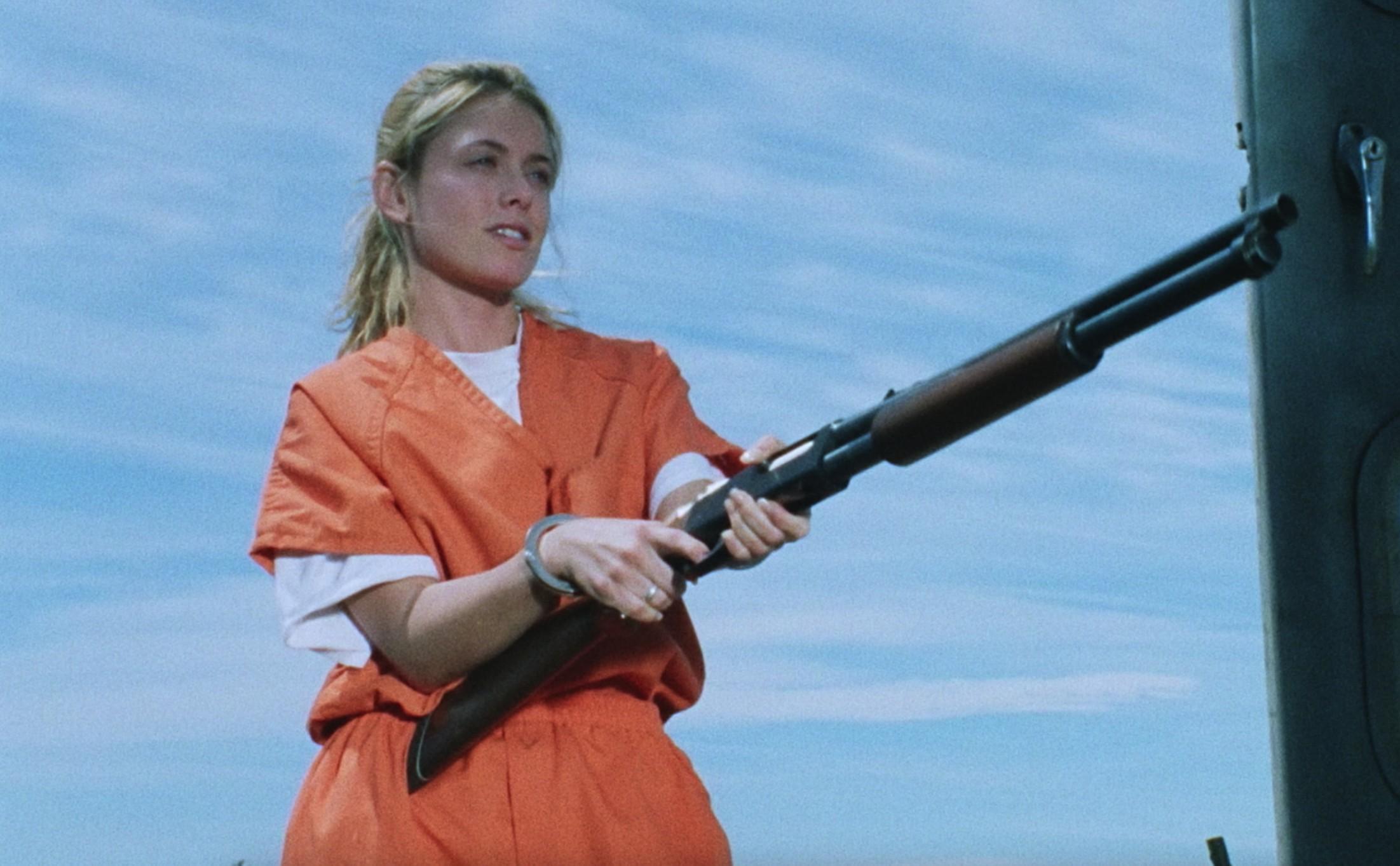
“Hunting for Fish” is a brand-new indie flick that was made in Denver in the late ’90s by filmmaker Lance Lucero of Warehouse 9 Productions. It has the feel — and plot — of the grunge era of movies, a comedy-thriller about a stolen fortune in diamonds, an ex-insurance fraud investigator-turned-thief, a cocky black-market dealer and a corrupt diamond jeweler, all involved in a long con.
But who’s conning who, and how, and who’ll come out with a fistful of gems? That’s the conceit of “Hunting for Fish,” which hit Amazon Prime Video this year.
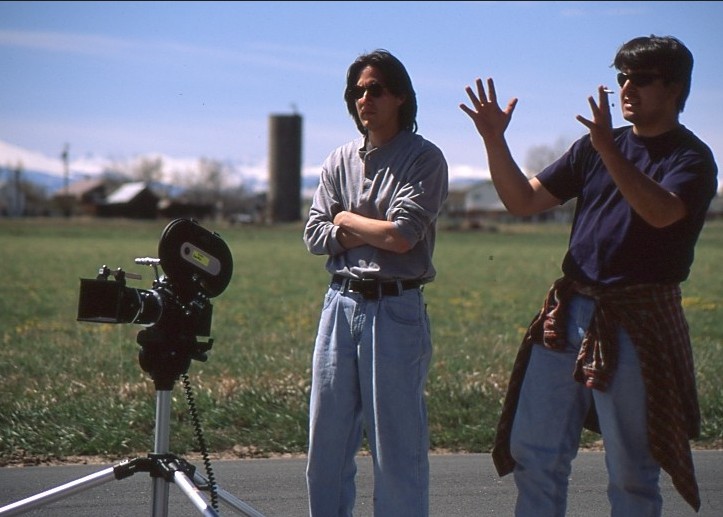
“It has the feel of late-’90s cinema because that’s exactly what it is,” says Lucero. “It’s not a period piece. This is true retro. We shot it in 1997 on film. People who see the film sometimes ask me where we got the old cars. How did you capture the ’90s so faithfully? Well, it was pretty easy.”
He laughs. “That was then. That was me as a filmmaker then. That was just the world at the time.”
Lucero never went to film school. “But I’ve always hired professionals who did,” he says, and smiles. In the early ’90s, Lucero got his start by creating public-access short films — but even then, he understood that he wanted to do more than just shoot on video. “That wasn’t real film,” he admits. “I remember thinking, ‘This ain’t cinema.'”
So he decided to make something on actual film, a short that he could use as a “sort of calling card.” That attempt turned out to be the award-winning short film “Fantasyland,” with knights in shining armor staging a singular fight scene — one that Lucero filmed at Wheat Ridge’s Prospect Park. “We shot that in one day, after six months of planning,” recalls Lucero. “At the end of that day, the crew and I were all sitting at Govnr’s Park, and I was stunned that I’d done it. It was surreal.”
After creating “Fantasyland” and enjoying its success on the festival circuit, Lucero’s confidence was definitely boosted. “I thought, ‘I can do this,'” he says. And that led directly to the feature project that would become “Hunting for Fish.”
Immediately, there were obstacles, one of them being the Denver Film Society that ran the Denver International Film Festival. When Lucero stopped by with his short, he was pointed to the table where student films went. “To be fair, this was ’95 or so, and I still looked like I was sixteen years old,” laughs Lucero. “A lot of people didn’t take me seriously when I walked in the door. … So I did what I was told, but I knew that was going to go right in the trash. I was pretty bent out of shape. I’d paid for parking, too!”
Lucero says he learned an important lesson that day and admits he still feels like he’s on the “fringe” of many of Colorado’s cinematic organizations.
Warehouse 9
But back in those days, Lucero was buoyed by all the production going on in Denver. “We still had ‘Father Dowling Mysteries’ shooting here,” he says. “We had ‘Perry Mason.’ ‘Angels’ had just been shot, and they’d just done ‘Cannibal! The Musical.’ There was a lot going on, and everyone was excited.”
The 1997 filming of “Hunting for Fish” took place all over Denver. Much of the principal photography was done at the Warehouse 9 facilities, a modular furniture warehouse that the federal government had leased from his family but didn’t use, allowing Lucero to film in the space rent-free.
“And most of the driving sequences were shot in that parking lot,” says Lucero. “We’d just point the car into the sun and then bounce the car, add some exteriors of it driving either on Washington Street or I-25. The opening sequence was at 36th and Zuni, which is now condos, but was then just farmland. The adult store was at Washington and 70th. And the big-city shot — one of my favorites from the movie — that was right off 20th Street near the Skate Park, which has changed so much. Most of what we shot just doesn’t exist anymore.”
Lucero attributes the delay in the movie’s release to a number of factors, not the least of which was its independent funding. “It was all on my shoulders,” he recalls. “But it was also the technology advancements over time.” Either Lucero didn’t have access to the equipment needed to achieve his vision, or the tech was advancing so rapidly that it was tough to keep up. Standard resolution was quickly changing to HD, and with every push forward in the digital age, Lucero had to renegotiate how to adapt. The process took several years and finally, he admits, he gave up for a bit.
“I was burnt out,” Lucero says. “I mean, burnt out. I thought I’d take a minute to catch my breath, and then that minute took five years.” Meanwhile, Lucero took a day job at his family business, that modular furniture company. “It was back-breaking work, but lucrative,” he says, adding that he also worked other jobs, like facilities specialist at a national lab, hazardous-load truck driver, and a lead at a wind turbine company. “I jumped ship on labor jobs and committed all my time to remastering Hunting for Fish in 2018.”
That redirection paid off: Hunting for Fish won “Best Retro Film” at CineFest in NYC that same year, and the prize was distribution … finally. But even that didn’t stick. “I didn’t care for that company, and on the recommendation of an entertainment lawyer at the festival, secured representation with another distribution company,” he says.
And then came one final delay that the rest of the world was also dealing with: the COVID pandemic. “We got that solid distribution just as the pandemic started,” says Lucero, “and then the distribution model fell apart on a national scale. Nobody was going to theaters.”
But even that pause turned out to be time well spent. By the time he came back to the process, the technology had changed so much that he sort of had to start over. Computers were better and faster; programs could suddenly do tasks that had previously been done by hand, or with more onerous processes. “It was a new world,” he says, recalling that telecine — the process of transferring traditional motion picture film into digital format “was like $200 an hour. Now, it doesn’t even scratch that — and you can fit the whole thing on one physical drive.”
Distribution had changes, too. “I was able to finally make it exactly what I wanted it to be,” he says, noting that he made a deal with Adler & Associates Entertainment. “I was tired of waiting for something to happen, and he asked me if I want to release the film. I said, ‘Yes, let’s get it out there.’ That was in January. They made it happen really fast. It’s tough marketing a film with no hype.”
Lucero clearly has lots of love for “Hunting for Fish,” which debuted on Prime in March. That makes sense; it’s his baby, now more than old enough to vote and drink and perhaps already be on its second marriage and facing a quarter-life crisis. But Lucero says that’s the beauty of it. “The movie has some age to it, but it’s never been seen,” he says. “All the delays have really been a blessing in disguise. I couldn’t be more proud of ‘Hunting for Fish,’ no matter how long it’s taken for audiences to see it and enjoy it.”
So pop some popcorn, maybe grab a Jolt cola and some Butterfinger BBs. It’s time to go back to 1998, if only for a little over 90 minutes.